Two-Year Transportation Program

Get Fairfax City Moving banner with people navigating around the city


The Two-Year Transportation Program is a list of priority projects to pursue for funding consideration. These projects align with the goals of the Multimodal Transportation Plan and Comprehensive Plan and help the City advance our transportation goals.

100% of residents: 15 minute walk to neighborhood, 15 minute walk to park, 10 minute walk to the bus station. 40% non-SOV mode share. 

In 2017 the city developed the Multimodal Transportation Plan, a long-term vision for maintaining regional connections, providing more transportation options, and making strategic decisions about how to improve transportation in Fairfax. This plan has been incorporated into the 2035 Comprehensive Plan, which was adopted on Feb. 12, 2019 and updated Oct. 8, 2024.

Frequently Asked Questions

What is a Two-Year Program?

A two-year program outlines priorities for projects over the next 2-10 years. The funding application and project development cycle is a long process in Virginia, and in order to be considered for many sources of public funding allocated in one, two or even six years, the City has to apply now. While we don’t want to get ahead of ourselves in terms of planning, we also do not want to miss the opportunity to receive public dollars for important projects.

View the transportation project “road map,”(PDF, 3MB) an overview of the project development life cycle.

Every two years, the City develops a list of transportation projects that we are interested in submitting for funding consideration including bicycle, pedestrian, trail, transit, intersection, and roadway projects. The list also includes concept studies to determine the technical feasibility of and public support for concepts that may be submitted for funding in future years. Project priorities are informed by recommendations in the Comprehensive Plan and other policy documents, funding eligibility requirements and opportunities, and public feedback.

Two Year Transportation Program Process
1. Potential Projects: Staff develop a list of potential projects identified in various policy documents including the Comprehensive Plan, Small Area Plans, Parks and Recreation Master Plan, Transit Development Plan, and others
2. Funding Opportunities: Includes NVTA, SmartScale, Revenue Sharing, RSTP, TAP and others
3. Public Input: Community prioritization that identifies the most important projects to pursue
4. Two-Year Transformation Program is formed: The Two-Year Transportation Program is a list of priority projects for the city to pursue funding for over the upcoming two-year funding cycle

Why do we need a Two-Year Program?

We need to think strategically about what projects will help improve livability in the City and make our commutes more predictable. Since it can take several years to fund and construct a project, we also need to think about what we might need in in the future.

As we think about this program, consider the facts below:

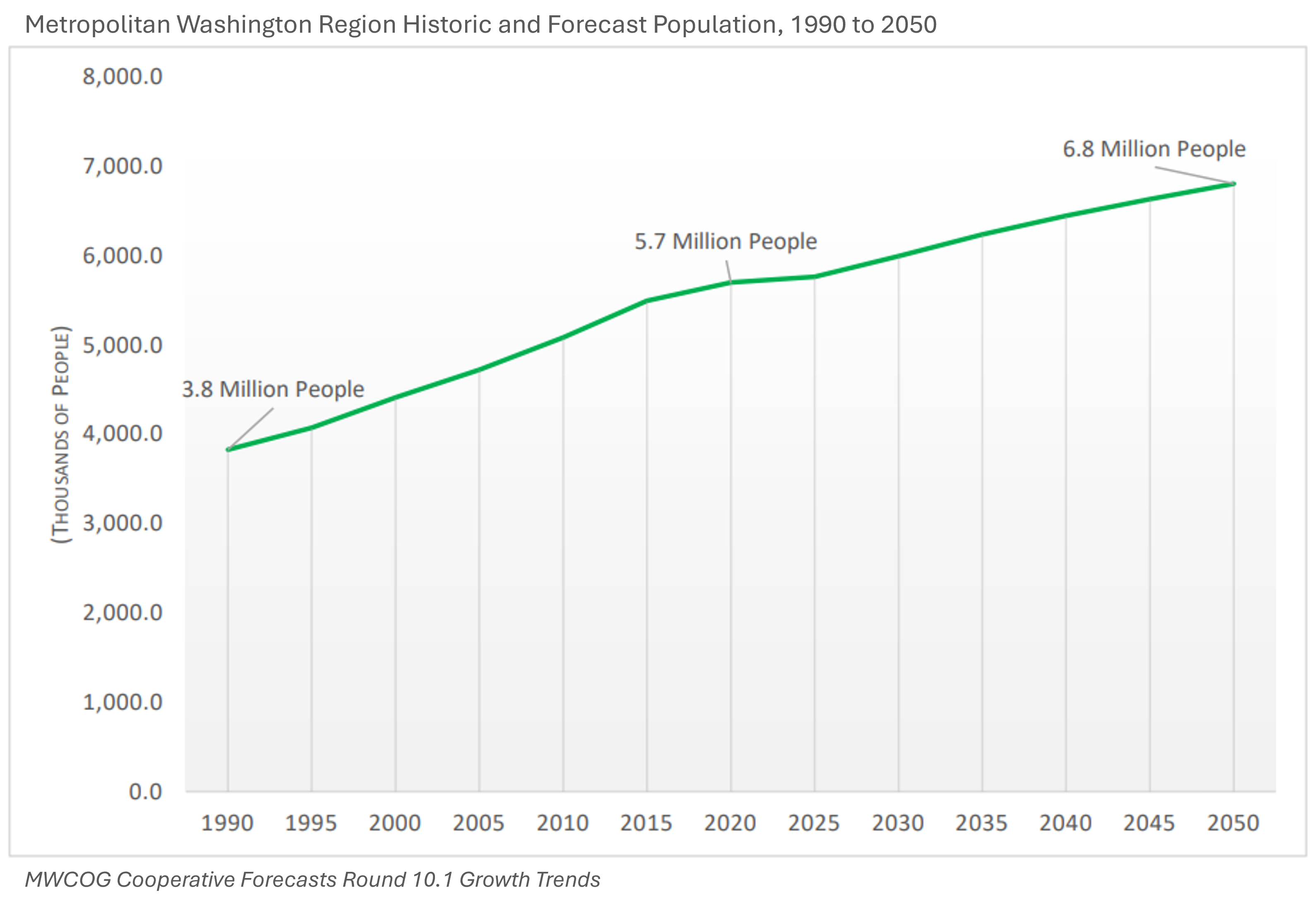
The region is expected to grow by more than 1 million people in the next 20 years.

Traffic in northern Virginia is already congested, and thousands of regional travelers pass through Fairfax each day in addition to local traffic that relies on major city corridors.

City of Fairfax regional map


We have limited space and cannot expect to build our way out of congestion, but we can make improvements to provide more options and increase the reliability of our roadway system.
blue total street grid map of City of Fairfax

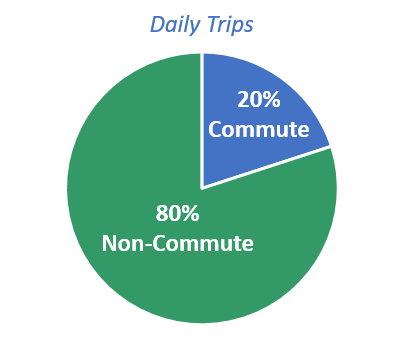
Daily Trips: 20% commute and 80% non-commute Around 20% of trips in the region involve commuting; the rest involve trips to help us meet our other daily needs, such as shopping, socializing, and running errands. Some projects may improve our commutes while others could help with the rest of our trips.


1/3 of all houshold trips are less than one mile in distance, half of these short distance trips are driven Around 1/3 of all trips in the region are less than a mile, and currently more than half of these short trips are driven. Some projects could provide more options to walk, bike, or take transit for these short trips instead of requiring a car.


As we develop each two-year program we consider these and other factors in our project prioritization.

How is transportation funding in Virginia allocated?

There are many different sources of transportation funds. Each has different specifications such as:

  • Project eligibility requirements
  • Application timelines (annual, biannual)
  • Funding available (1, 2, 6 or 7 years in the future)
  • Local match requirement
  • Complexity of application
  • Source of funds (federal, state, regional)
  • Funding maximum

Following is a graphic illustrating the two-year timeline for transportation funding.

Funding Timeline

Some funding applications occur annually; others occur bi-annually. Funding applications that are due in odd calendar years are shown on the top half of the circle, and applications due in even calendar years are shown on the bottom half of the circle. Each funding source is represented by a unique color band.

What projects are included in the Two-Year Transportation Program?

Two-Year Transportation Program Project Prioritization

  1. Projects with partial funding
  2. Projects with concept planning complete and now ready for implementation
  3. New projects

There are more potential projects than we can feasibly include in any two-year program, so we prioritize which projects to pursue with public input, City Council input, and staff recommendations. Higher priority is given to projects with partial funding or concept planning before new projects are prioritized. 

To view the status of ongoing transportation projects, visit the Projects page.